The FDA has issued multiple safety communications over the past decade about infections linked to reusable endoscopes and duodenoscopes, a reminder that endoscopic procedures can involve more than routine risk. An Endoscopy lawsuit usually refers to a legal claim alleging that an injury after an endoscopic procedure was caused by avoidable medical error, contaminated equipment, anesthesia problems, or a defective device. Our goal here is to explain what that means, how these claims are categorized, and what evidence usually determines whether a case is viable.
Free & Confidential
No Win, No Fee
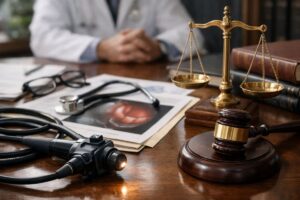
The FDA has repeatedly warned that certain reusable endoscopes can remain contaminated even after cleaning and disinfection, particularly complex devices with hard-to-access internal parts. What this means in practice is simple: an endoscopy injury claim is not one fixed national mass tort in every situation. It is usually a case built under medical malpractice law, product liability law, or sometimes both.
In plain English, an Endoscopy lawsuit is a claim for compensation after harm linked to an endoscopic procedure. That harm may involve infection, sepsis, bowel perforation, internal bleeding, anesthesia injury, delayed diagnosis, or death. In some cases, the claim centers on what a hospital or physician did wrong. In others, the focus shifts to whether a scope or related device was defectively designed or marketed with inadequate warnings.
The practical takeaway is that the legal theory must fit the facts from the beginning. A contamination case needs different proof than a negligent sedation case. A design-defect claim against a manufacturer is also very different from a malpractice case against a surgery center.
Answer a few simple questions in 60 seconds to see if you qualify for compensation.
FDA safety communications and outbreak investigations have shown that endoscopy-related harm can arise from both clinical care and equipment problems. That distinction matters because liability often follows the source of the failure.
The most common categories we see are infection and sepsis claims, perforation or internal injury claims, sedation or anesthesia complications, delayed diagnosis cases tied to procedural error, retained foreign object cases, and wrongful death claims. Some involve a single breakdown. Others involve several at once, such as a difficult procedure followed by delayed recognition of a perforation and then sepsis.
A useful way to think about these cases is to connect the injury to the likely point of responsibility before building the file. The same basic approach appears across other injury litigation involving medical treatment and devices, including claims tied to unsafe implanted ports and catheter systems.
The CDC and FDA have both addressed outbreaks involving contaminated reusable scopes, especially duodenoscopes, because bacteria may persist in narrow channels or around intricate components despite reprocessing efforts. In legal terms, these cases often turn on timing, organism identification, hospitalization records, and whether similar infections appeared in the same facility.
Sepsis claims are often the most serious because the infection may spread rapidly and require ICU care, surgery, or prolonged antibiotic treatment. When symptoms such as fever, abdominal pain, chills, vomiting, or bloodstream infection appear soon after an endoscopic procedure, the medical timeline becomes highly relevant. Positive cultures can also help narrow the causation question.
The practical step here is to preserve records showing exactly when symptoms began, when treatment started, and what infection was diagnosed.
We handle the legal process so you don't have to. You focus on moving forward.
The American Society for Gastrointestinal Endoscopy has long recognized that perforation, bleeding, aspiration, cardiopulmonary events, and medication-related complications can occur during endoscopy. But a known complication is not the same as a non-negligent event. A perforation may be a recognized risk, for example, while a delayed response to clear signs of perforation may still support a claim.
Anesthesia and sedation cases often focus on oxygen deprivation, poor monitoring, aspiration, incorrect medication dosing, or delayed intervention after a patient began to decline. Procedural injury claims may also involve burns, lacerations, or improper instrument use. The question is usually not whether the risk existed in theory, but whether the team met the standard of care when warning signs emerged.
The practical move is to compare the consent form with the actual chart. If the records show a preventable breakdown rather than an unavoidable complication, that distinction matters.
Some endoscopy cases point beyond the provider and toward the manufacturer. The FDA has issued safety communications about duodenoscope design and contamination risk, and manufacturers such as Olympus have been discussed publicly in connection with that regulatory history. That does not mean every case involving a named brand creates a valid claim. It means the exact model and the exact safety issue matter.
Product liability cases may allege that a device was defectively designed, difficult to clean safely, improperly manufactured, or sold without adequate warnings about infection or use-related hazards. This is the same legal framework seen in other product cases involving alleged defective consumer or medical products, such as claims involving talc-based products and cancer allegations.
The practical takeaway is to identify the exact device model, any recall status, and any FDA warning connected to it before drawing legal conclusions.
FDA communications, CDC guidance, and ASGE materials all point to a recurring issue: causation in endoscopy cases usually depends on the mechanism of harm, not only on the fact that harm followed a procedure. A bad outcome alone rarely proves liability.
In plain language, these injuries happen in several ways. Reusable scopes may retain bacteria in channels that are difficult to disinfect fully. Residual moisture may support microbial growth. Staff may deviate from cleaning instructions. A physician may injure tissue during the procedure. A facility may miss symptoms that should have triggered immediate evaluation. In device cases, the design itself may make contamination or misuse more likely.
What this means in practice is that timeline evidence often decides the case. The strongest claims show what happened before, during, and after the procedure with enough detail to connect the injury to a specific failure.
The FDA has repeatedly acknowledged the challenge of reprocessing reusable endoscopes, especially where complex design features make cleaning difficult. Biofilm is part of that problem. It is a layer of microorganisms that can adhere to surfaces and resist removal. Once it forms inside a device channel, ordinary cleaning may not be enough.
This issue has drawn legal attention because contamination may occur even when staff appear to have followed instructions. That does not automatically create liability, but it may support a closer look at device design, facility protocols, drying practices, storage conditions, and compliance records. The practical step is to request infection-control documentation and reprocessing records whenever contamination is suspected.
ASGE guidance makes clear that endoscopy has inherent risks. Courts and experts also recognize that medicine does not guarantee a perfect outcome. The legal issue is narrower: was the event unavoidable despite appropriate care, or did the provider fail to act as a reasonably careful professional would have acted?
A preventable complication may involve poor monitoring, failure to recognize internal bleeding, delayed imaging after severe pain, incomplete discharge instructions, or continued use of a device despite known safety concerns. The same pattern appears in many injury cases involving allegedly preventable harm, including claims tied to toxic exposure and delayed disease recognition.
The practical focus should remain on how the team responded once warning signs appeared.
Patients and families are seeking answers after reports that certain endoscope devices may have exposed people to serious infections, sepsis, and other complications. Lawsuits allege that some scopes were difficult to properly clean and that adequate warnings may not have been provided about the risk of contamination and harm.
If you or a loved one developed a serious infection or other major complication after an endoscopy procedure, you may have legal options, but filing deadlines may apply. A free, confidential case review can help you understand your next steps.
Patient-safety literature from the Agency for Healthcare Research and Quality consistently emphasizes that medical harm can arise from individual error, system failure, or product-related risk. In an endoscopy case, that means liability may extend beyond the physician who performed the procedure.
Potential defendants can include gastroenterologists, surgeons, anesthesia providers, hospitals, ambulatory surgery centers, nurses, infection-control personnel, and manufacturers of scopes or related equipment. The structure of the claim matters because malpractice and product liability cases require different proof, different experts, and sometimes different filing rules.
The practical takeaway is to identify every entity involved in the procedure before assuming only one party bears responsibility.
Medical malpractice claims usually require proof of four elements: duty, breach, causation, and damages. In simple terms, the provider or facility owed a duty of care, failed to meet the accepted standard, caused harm, and produced measurable losses.
In endoscopy cases, malpractice allegations may involve poor technique, improper sedation monitoring, failure to obtain informed consent, delayed diagnosis of a perforation or infection, or negligent cleaning practices within the facility. Often, the most revealing records are not limited to the procedure note. Nursing notes, discharge instructions, phone call logs, and readmission records may show whether early warning signs were missed.
The practical step is to gather the full treatment story, not only the endoscopy report.
Product liability claims against device makers usually fall into three categories: design defect, manufacturing defect, and failure to warn. A design defect claim may allege that the scope was so difficult to clean safely that contamination risk was built into the product. A manufacturing defect claim focuses on a problem with a specific unit or batch. A failure-to-warn claim argues that known risks were not communicated adequately.
These cases often require device identification, FDA documentation, technical analysis, and expert review. That makes early record preservation especially important.
The practical step is to preserve device stickers, billing records, operative documentation, and any recall-related notices that can identify the product.
Patients and families may have questions after reports that certain endoscope devices were linked to serious infections and other complications. Individuals who developed sepsis, infection, or other major health problems after an endoscopy may want to know whether proper warnings and safety steps were followed. If an endoscopy related complication harmed you or a loved one, you may have legal options, but filing deadlines may apply.
A free, confidential case review can help you understand your legal options.
Legal guidance across malpractice and product injury cases returns to the same structure: duty, breach, causation, and damages. Those elements are familiar because they control nearly every serious injury case, from procedure claims to major product cases such as litigation over injectable contraceptive risks.
In an endoscopy case, duty is usually straightforward. The harder questions are breach and causation. Did the provider or manufacturer fail in a legally meaningful way, and did that failure actually cause the injury? The answer often comes from a combination of chart review, imaging, pathology, cultures, follow-up treatment, and expert analysis.
Here is how to use that framework: build the case around the timeline. What happened before the procedure, what occurred during it, what symptoms followed, what treatment was required, and what losses resulted.
The records that matter most are usually the consent form, procedure report, anesthesia record, pathology report, lab work, imaging, hospital readmissions, infectious disease records, billing records, and proof of lost income. If infection is involved, sterilization logs, incident reports, and reprocessing records can become especially significant.
Photographs, symptom journals, and family observations can also help explain the course of injury, though the medical record still does most of the heavy lifting. In serious cases, expert review often determines whether the evidence supports negligence, product defect, or neither.
The practical step is to request the complete chart early, not only the discharge summary.
This is where many people get misled. A signed consent form does not automatically defeat a case. Consent acknowledges that known risks exist. It does not excuse avoidable error, substandard monitoring, negligent cleaning, or inadequate product warnings.
The move that works is showing that the injury came from something preventable, not simply from the existence of risk. That may mean proving that symptoms were ignored, a device was unreasonably dangerous, or an infection source points back to contaminated equipment.
Answer a few simple questions in 60 seconds to see if you qualify for compensation.
Eligibility for an Endoscopy lawsuit usually depends on four things: a documented procedure, a serious injury, evidence linking the harm to the procedure or device, and measurable damages. In practice, qualification is document-driven.
Compensation may include past and future medical expenses, lost wages, reduced earning capacity, pain and suffering, disability-related losses, and wrongful death damages where a fatal injury occurred. In some jurisdictions and fact patterns, punitive damages may also be available, though those are not routine.
Several factors shape case strength. Timing matters because symptoms that begin soon after the procedure may support causation more clearly. Severity matters because minor and temporary problems are harder to pursue than major infections, surgeries, or permanent injury. Identification matters too, because a case is easier to investigate when the exact device, provider, and facility can be confirmed.
Preexisting conditions and alternative explanations can complicate the analysis, but they do not automatically defeat a claim. The simplest version of this is that clearer causation and better records usually produce a stronger case review.
Statutes of limitation vary by state, and the deadline may differ for malpractice, product liability, and wrongful death claims. Some states also require pre-suit notice, expert certification, or other technical steps before a case can proceed.
Acting early matters because records can be harder to obtain over time, facility documentation may not be retained forever, and legal deadlines can expire before the full picture becomes clear. In endoscopy cases especially, early review can preserve evidence that later becomes difficult to reconstruct.